
Field House
Date: 2024
Location: N/A
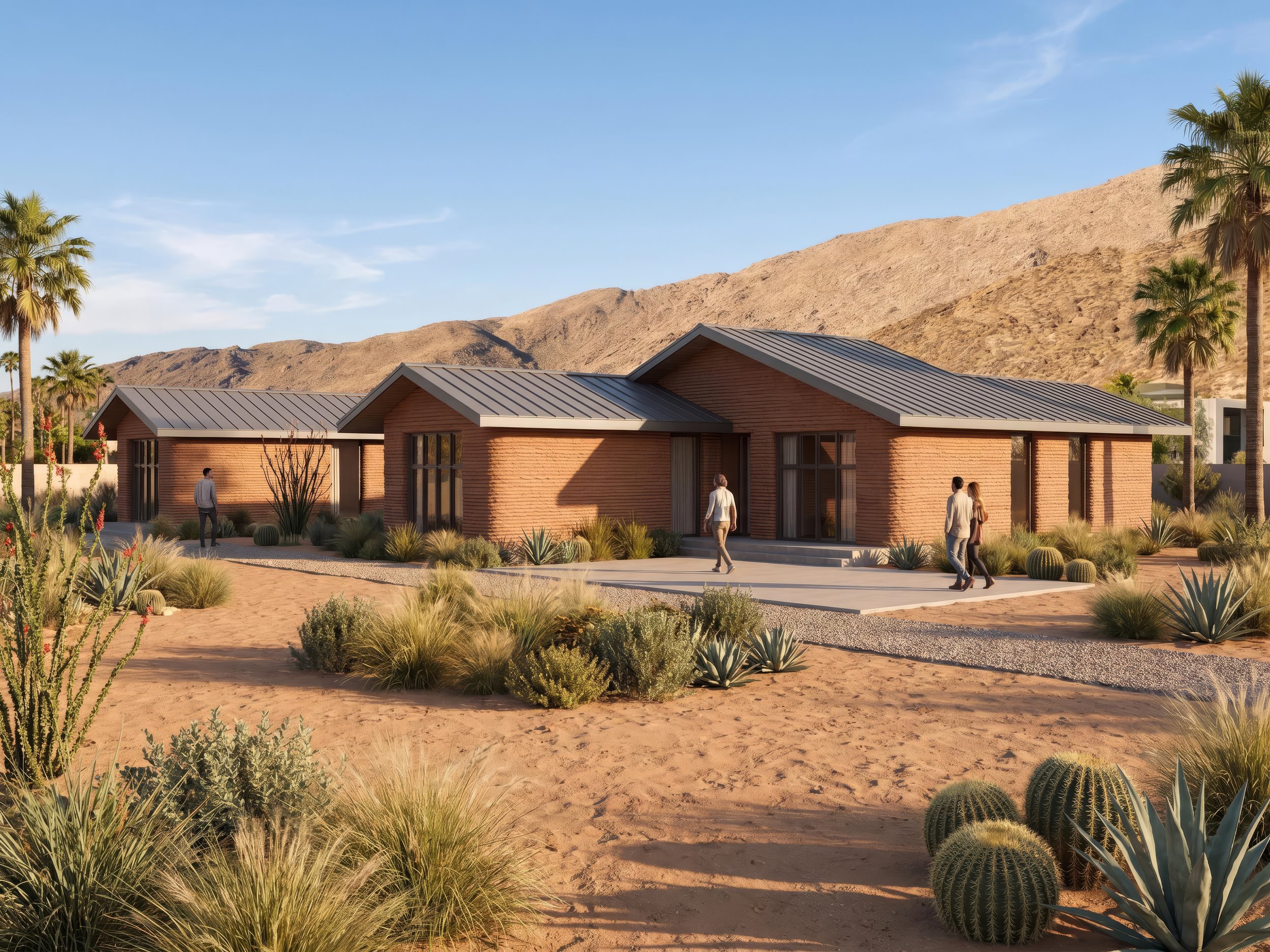
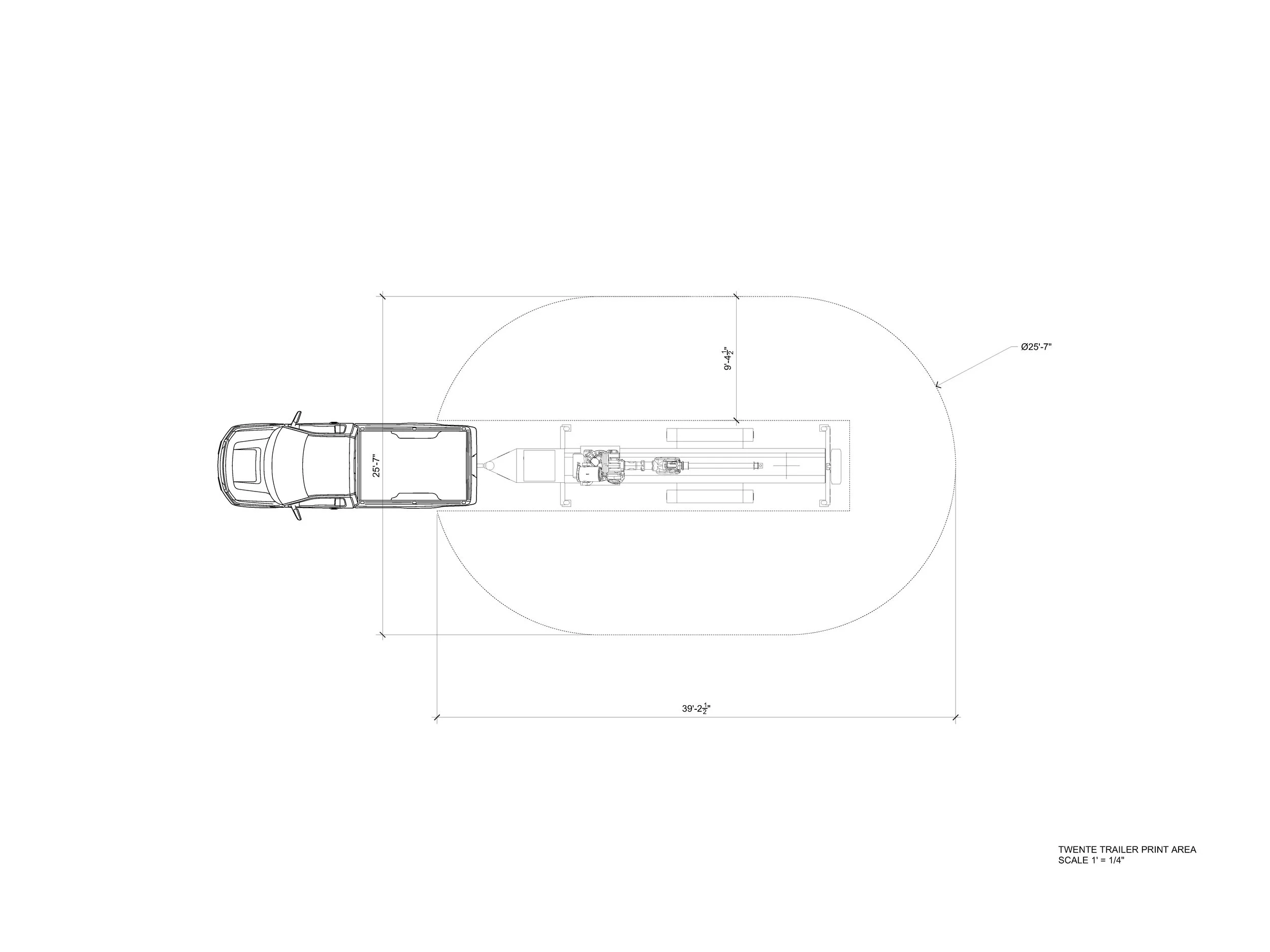
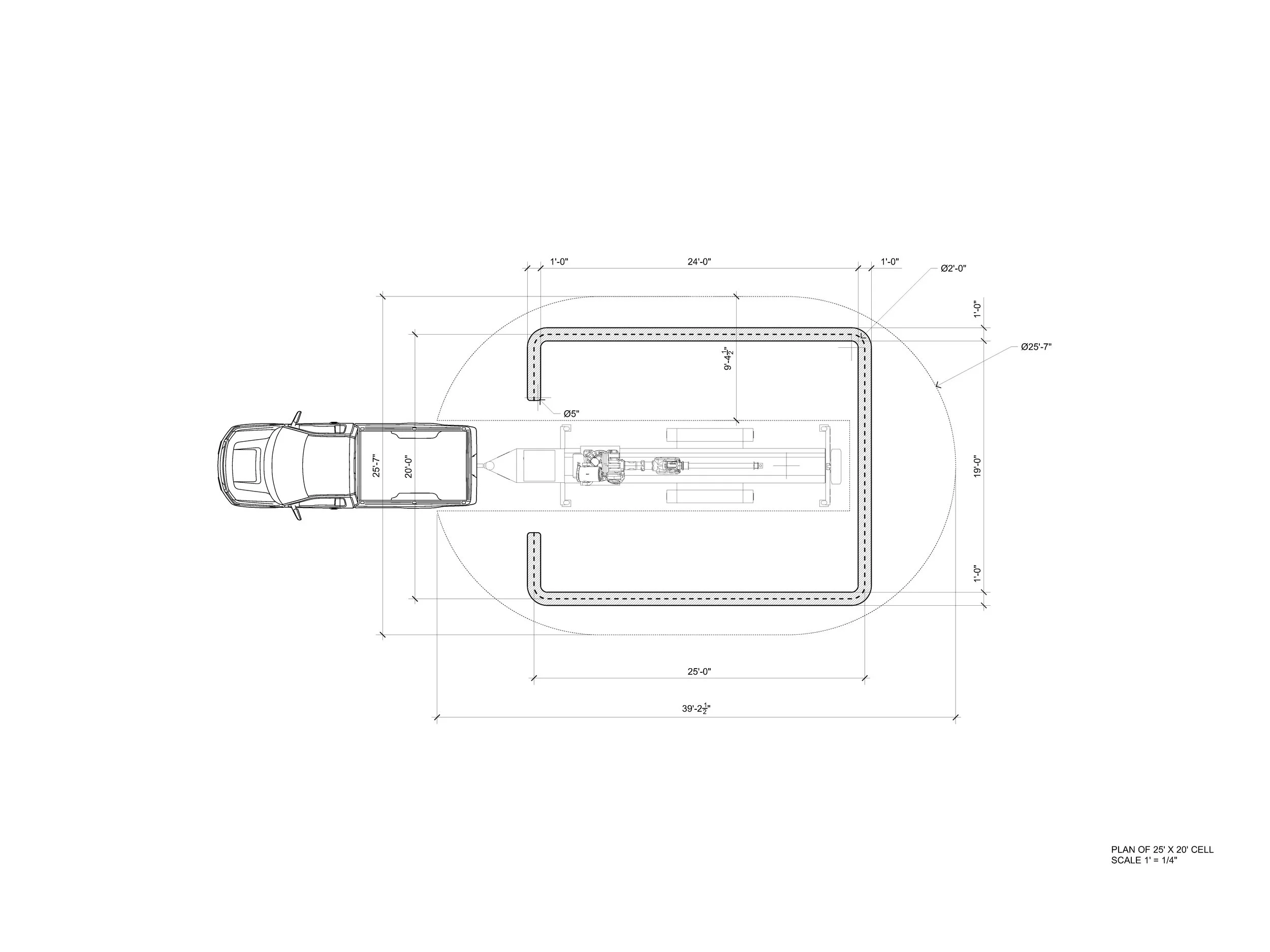
Field House explores the architectural possibilities of large-scale 3D earthen printing delivered by a trailer-mounted robotic system. Rather than treating the machine as a constraint, the project begins with it as a generative condition—asking what range of domestic spaces can emerge from a single, repositionable printer working within the geometric limits of a 25-foot by 40-foot work envelope.
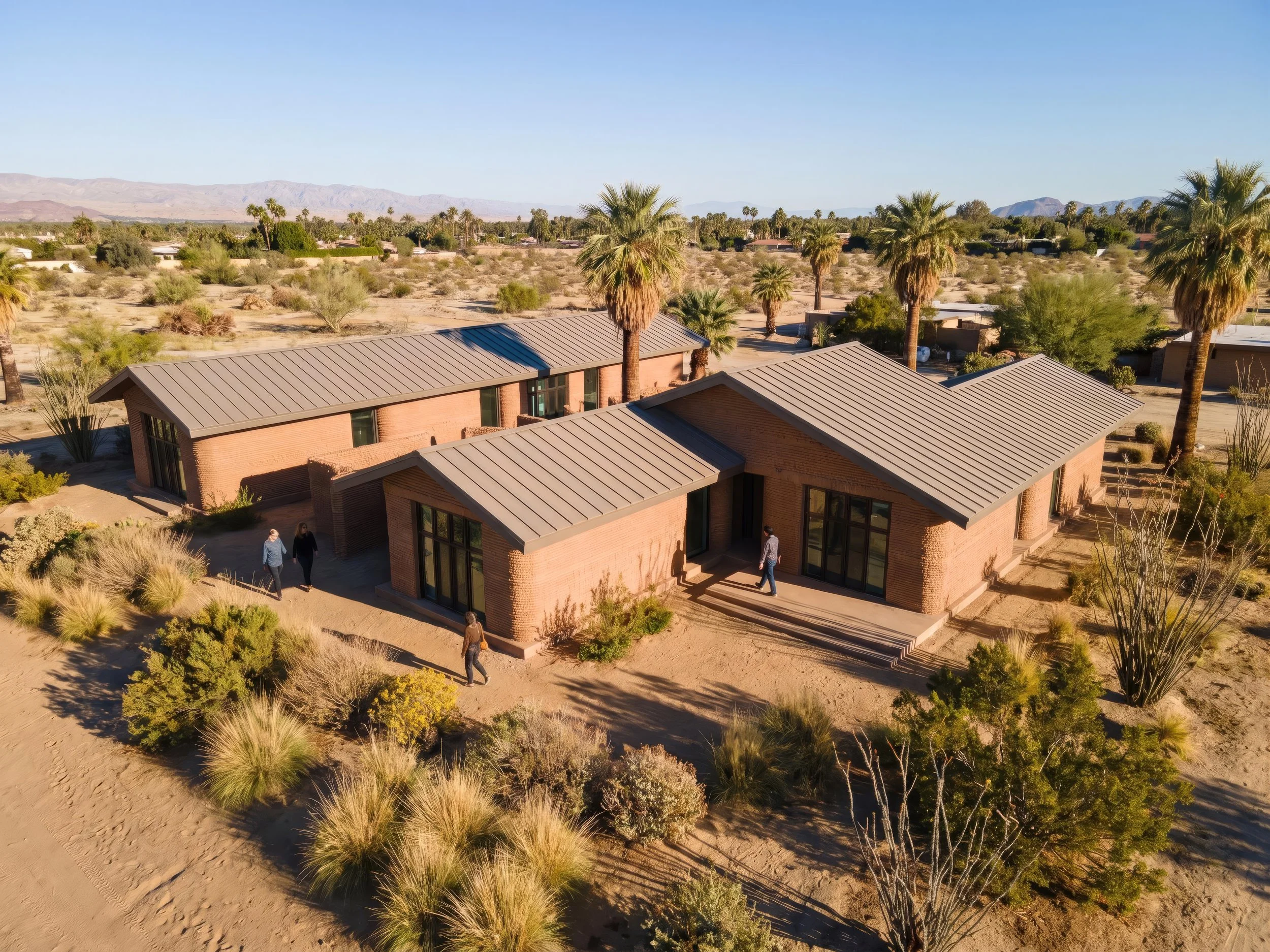
The robot travels to the job site on a customized trailer, is stabilized and leveled in minutes, and is able to print within a couple of hours. This workflow becomes the formal premise of the work, maximizing architectural opportunities with minimal printer repositionings. Each configuration is derived from the printer’s limits, accepting its reach as a kind of architectural datum from which walls, rooms, and enclosures are organized.
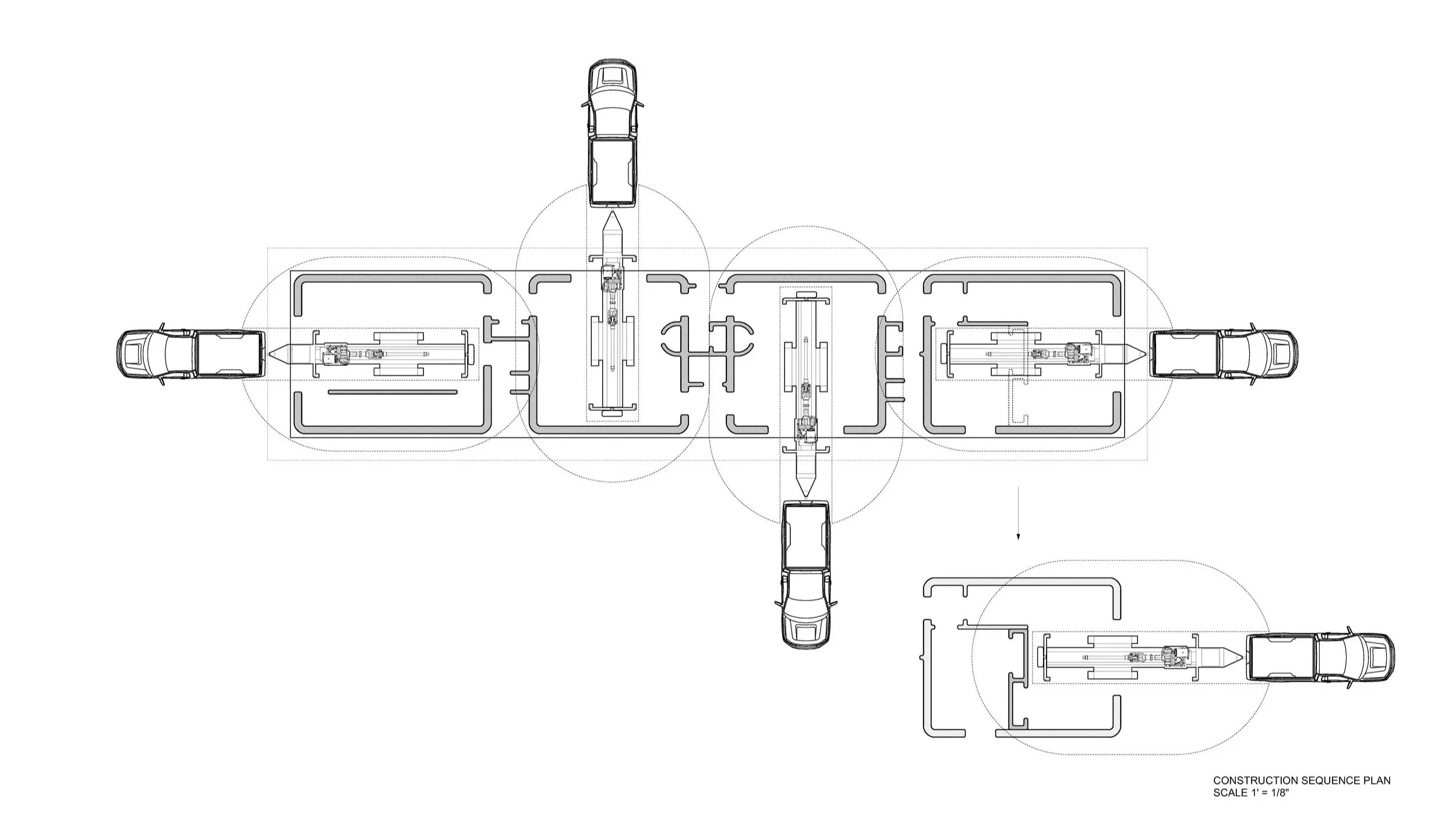
Field House, Plan of print locations
The result is a catalogue of thirteen distinct floor plan configurations, ranging from approximately 1,900 to 2,400 square feet, each exploring a different spatial arrangement within the same productive footprint. Some configurations favor open, flowing interiors; others introduce tighter cellular organization. Wall lengths vary, interior geometries shift, and the relationship between enclosed and implied space changes from scheme to scheme—yet all share a common origin in the mechanics of the print platform. This systematic variation demonstrates that repeatability and diversity are not opposites: a single robotic system, thoughtfully deployed, can yield a genuine range of architectural characters.
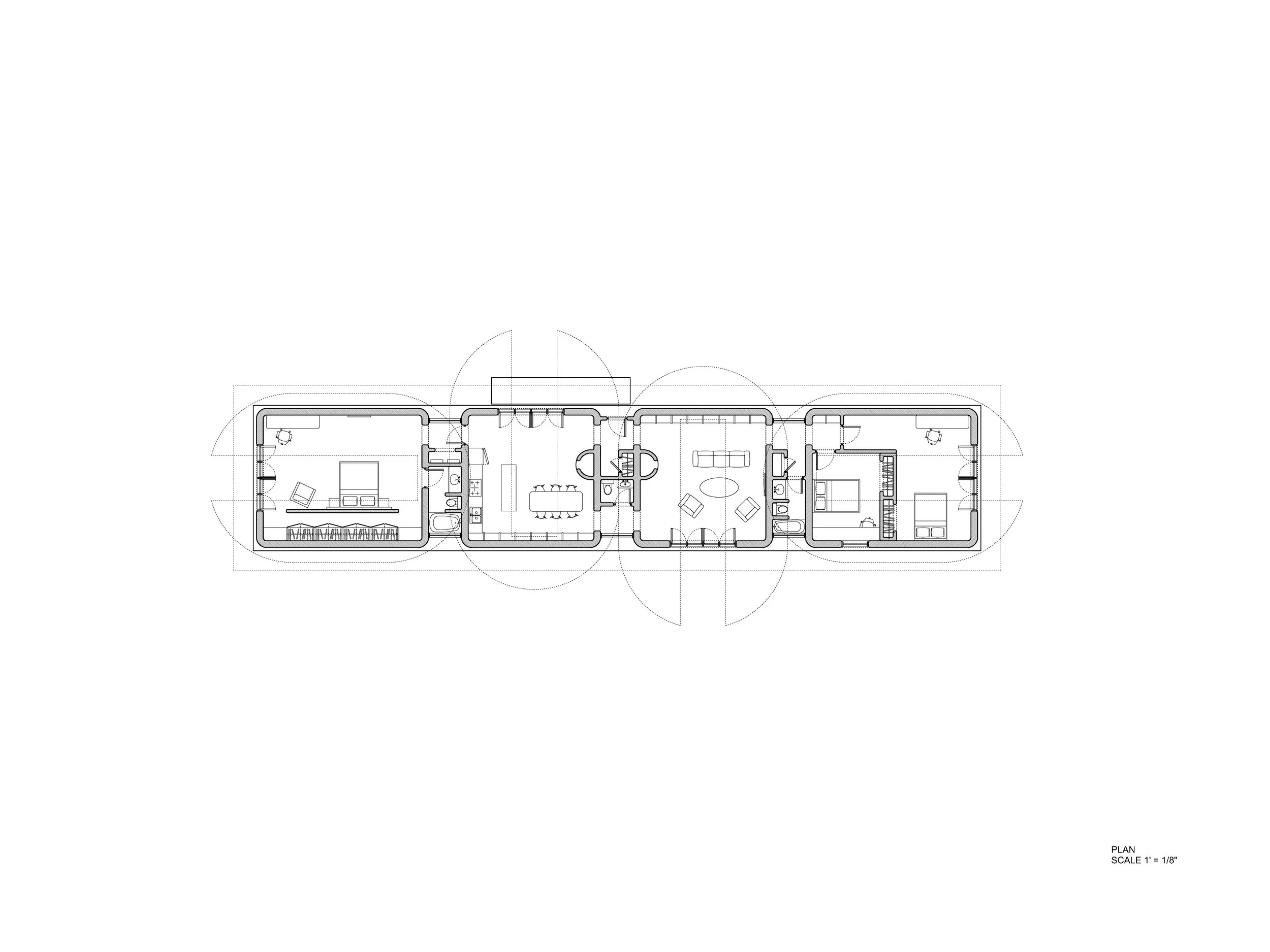
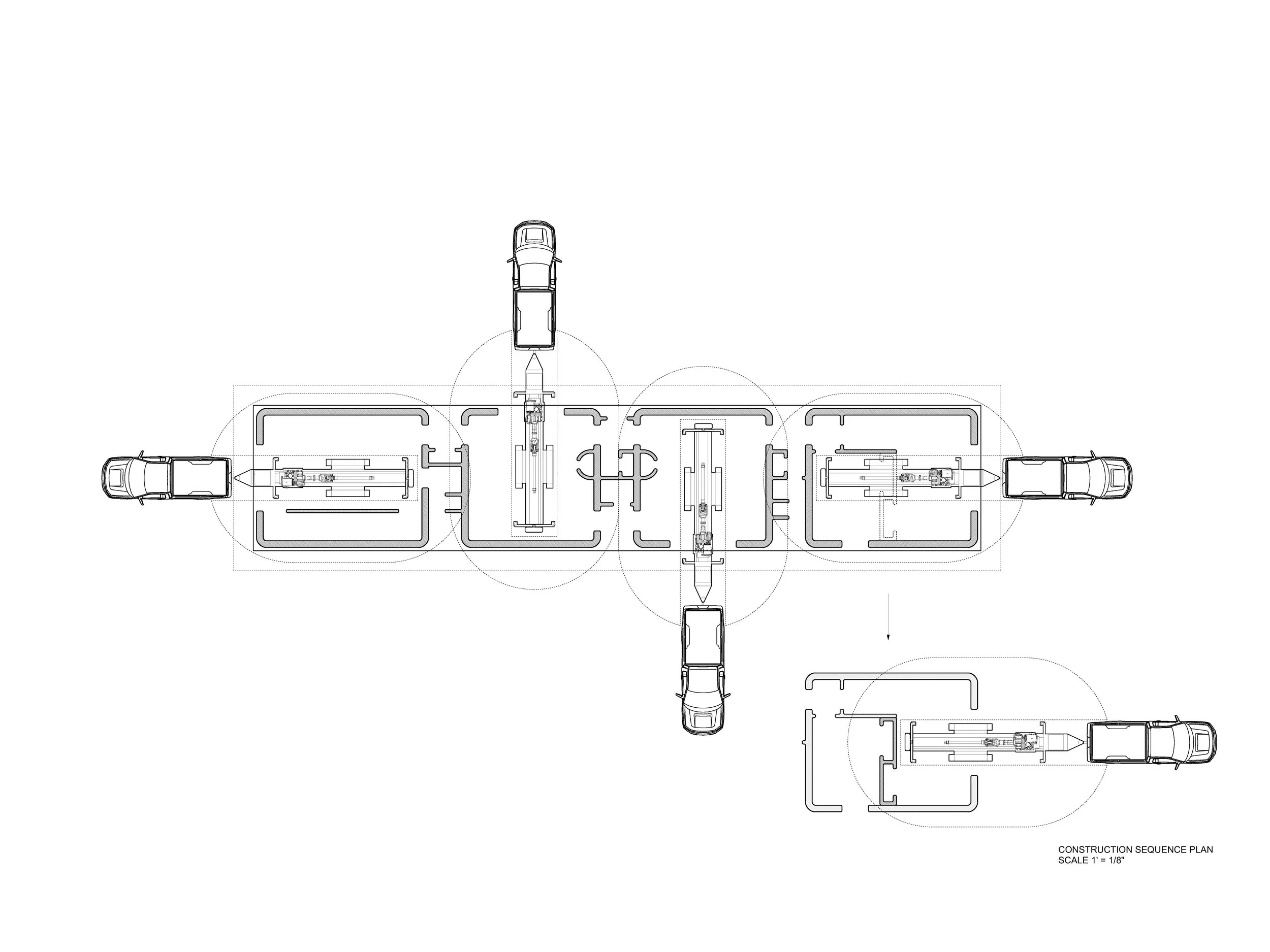
The construction sequence plan embedded in the project documents the choreography of the print—how the robot moves, where it pivots, and how successive layers of material accumulate into load-bearing walls. This sequencing is as much a part of the design as the plan itself. The timing of the tool path, the logic of the extrusion, and the cooling behavior of the earthen wall inform the architectural design.
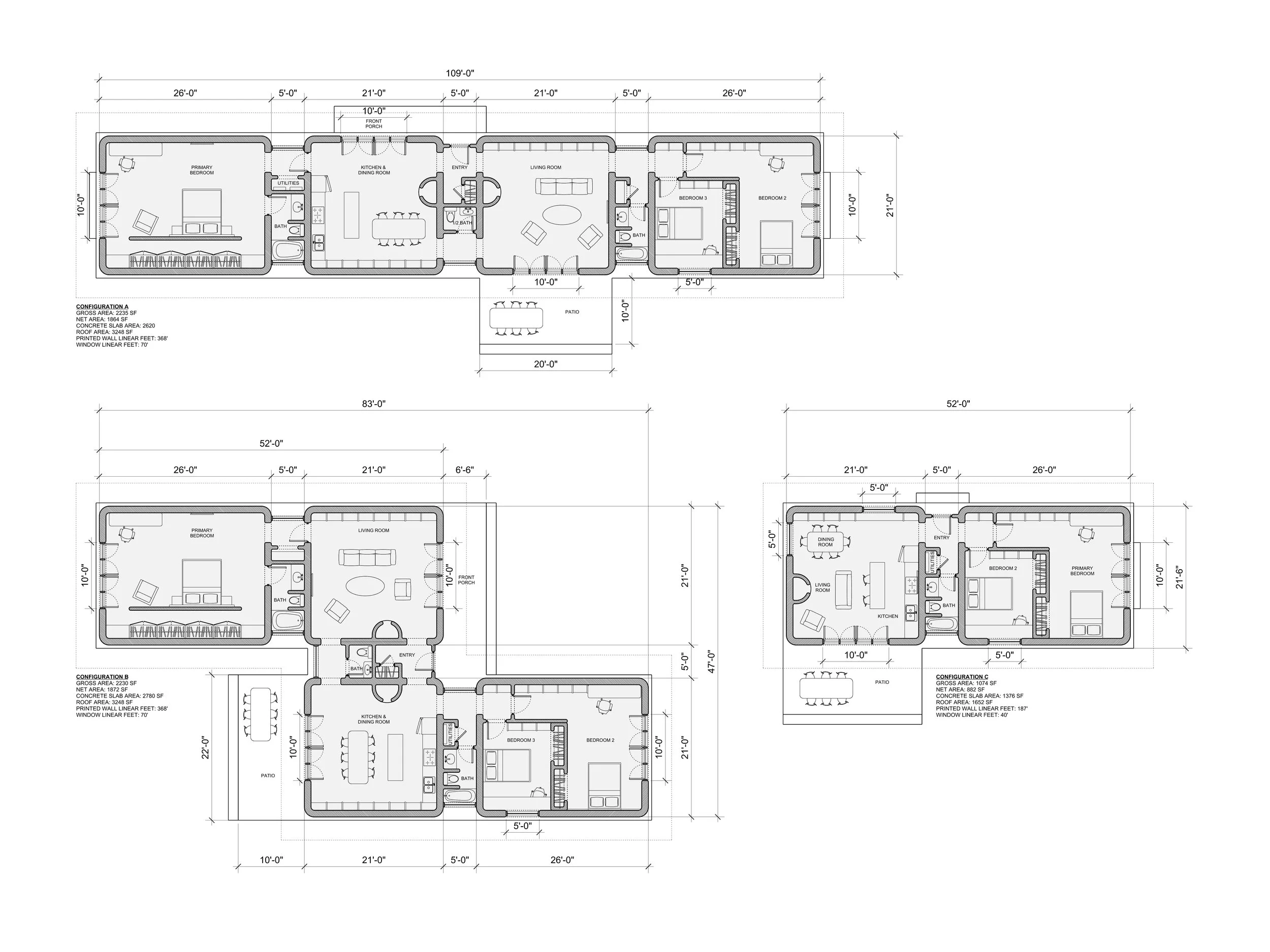
Field House, Three configurations of the house.
Underlying the project is a belief that industrialized construction need not produce homogeneous results. The Field House series treats the trailer-mounted robot not as a limitation to be overcome but as a collaborator with its own spatial intelligence. What the machine can reach, how it turns, and how far it extends become the raw material of a design methodology—one that is reproducible, deployable in remote or underserved locations, and capable of producing housing that is genuinely varied in form.
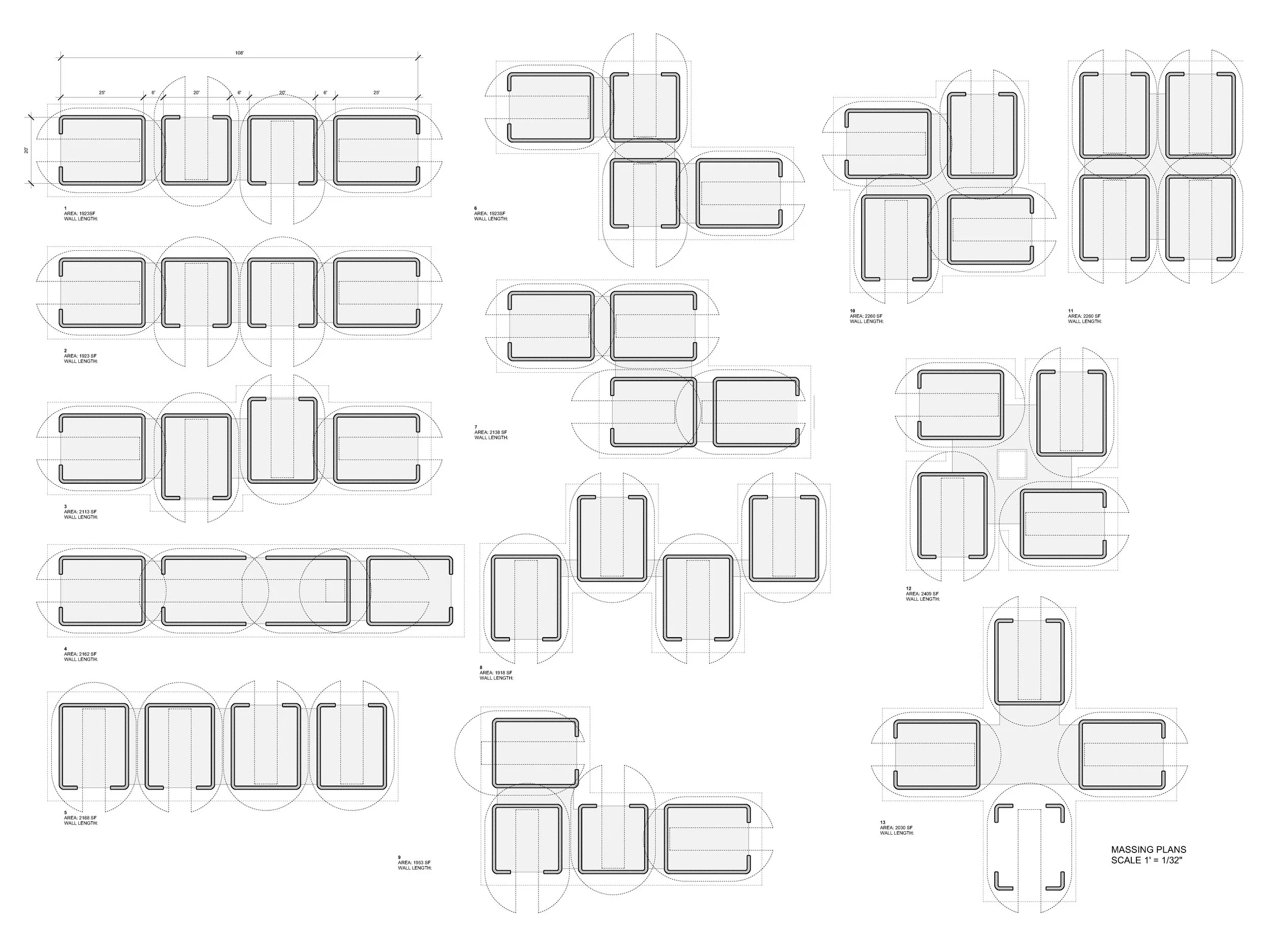
Field House, Various massing plans with printer locations
The project sits at the intersection of fabrication research and housing design, asking a practical question with spatial ambition: given this robot, this site condition, and this scale, what homes are possible?
Credits
Design: Andrew Kudless and Ronald Rael